
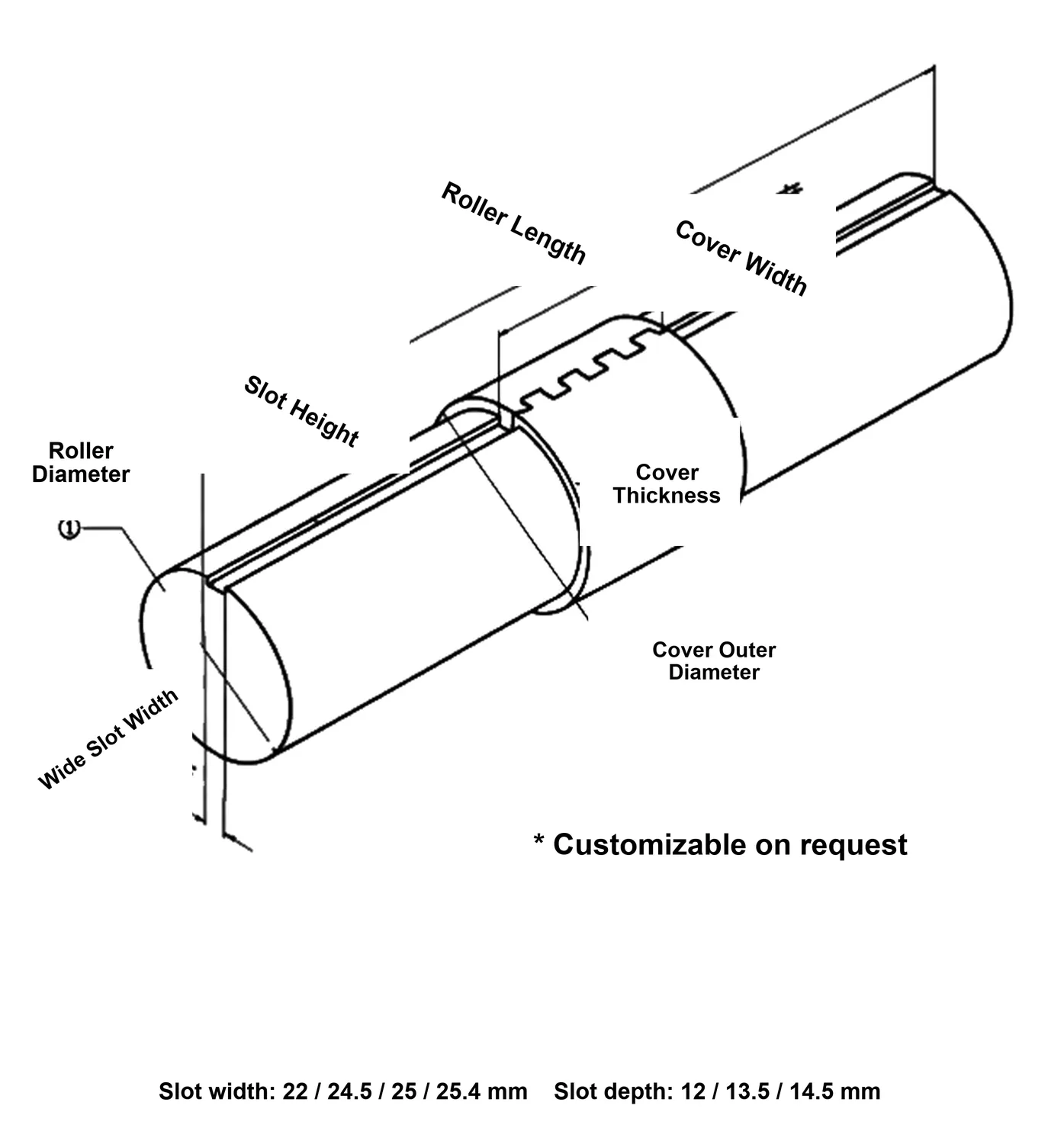
This guide explains what information to prepare before requesting a quotation for polyurethane anvil covers, die cutting blankets or cutting pads.
Why Measurement Matters
The anvil cover is the working surface between the die cylinder and the anvil cylinder. During production, the cutting die presses through the corrugated board and contacts the polyurethane surface repeatedly.
If the replacement cover does not match the machine correctly, it may cause difficult installation, uneven cutting pressure, cover movement during operation, poor cutting consistency across the machine width, shorter service life and extra downtime during replacement.
Clear measurements help the supplier review the structure before production and reduce the risk of an incorrect part.
1. Confirm the Machine Brand and Model
Start with the machine information. If available, provide the machine brand, model, rotary die cutter width, anvil cylinder details, original part number and current cover type.
Machine information is useful, but it is not always enough. Many replacement anvil covers still need to be confirmed by actual dimensions, photos, drawings or a physical sample.
2. Measure the Roller Diameter
The roller diameter, also called the anvil cylinder diameter, helps confirm how the cover wraps around the cylinder. This is especially important for finger-lock and other interlocking structures.
When measuring the cylinder, keep the measurement in millimeters and confirm whether the value is taken from the bare cylinder or from the outside of the installed cover.
3. Measure the Cover Width
Cover width is one of the most important dimensions. Measure the full working width of the polyurethane cover from one side to the other.
- Width of each section
- Total assembled width
- Number of sections per set
- Any left and right side difference
4. Measure the Cover Thickness
Cover thickness affects cutting pressure and die contact. If the cover is too thick or too thin, the cutting result may change after installation.
When measuring an old cover, remember that the working surface may already be worn. If possible, measure an unworn area or compare the value with the original specification.
5. Check Groove, Slot and Locking Dimensions
Some anvil covers include grooves, slots or locking details. These details affect installation and must be reviewed carefully.
- Groove width
- Groove depth
- Groove height
- Slot spacing
- Locking channel size
- Edge profile
- Backing plate thickness, if applicable
6. Identify the Locking Structure
Different rotary die cutters use different locking structures, including steel-backed covers, finger-lock covers, T-slot or channel-mounted covers, hook-style locking structures and machine-specific custom designs.
Take close-up photos of both ends of the cover, especially the locking area. For steel-backed covers, photograph both the polyurethane side and the metal backing side. For finger-lock covers, show the interlocking profile from the side.
7. Confirm the Hardness, If Known
Polyurethane hardness affects cutting performance, wear resistance and contact behavior. If you know the current hardness, include it in the inquiry.
If hardness is unknown, provide application details such as corrugated board type, production speed, cutting pressure condition, die condition, current service life and the main problem with the old cover.
8. Take Clear Photos
Photos often reduce misunderstanding faster than text. Useful photos include a full view of the installed cover, front and back side of the removed cover, locking structure close-up, side profile, worn working surface, machine nameplate and damaged area.
Place a ruler or caliper in the photo when possible. This gives the supplier a better reference for scale.
9. When to Send a Physical Sample
A physical sample is recommended when the locking structure is complex, the profile is difficult to measure, there is no drawing, the old supplier specification is unknown, or the buyer needs repeat supply with stable fit.
Quote Checklist
- Machine brand and model
- Roller or anvil cylinder diameter
- Cover width
- Cover thickness
- Groove or slot dimensions
- Locking structure photos
- Hardness, if known
- Required quantity
- Current cover photos
- Drawing or physical sample, if available
Final Notes
A polyurethane anvil cover is not only a wear part. It directly affects cutting pressure, machine downtime and production stability. Accurate measurement allows the replacement cover to be reviewed around the real machine condition, instead of only a general product name.
Need a Matched Polyurethane Anvil Cover?
Send your machine model, dimensions, required quantity and current cover photos to JUNSHIDA for a focused replacement review.