
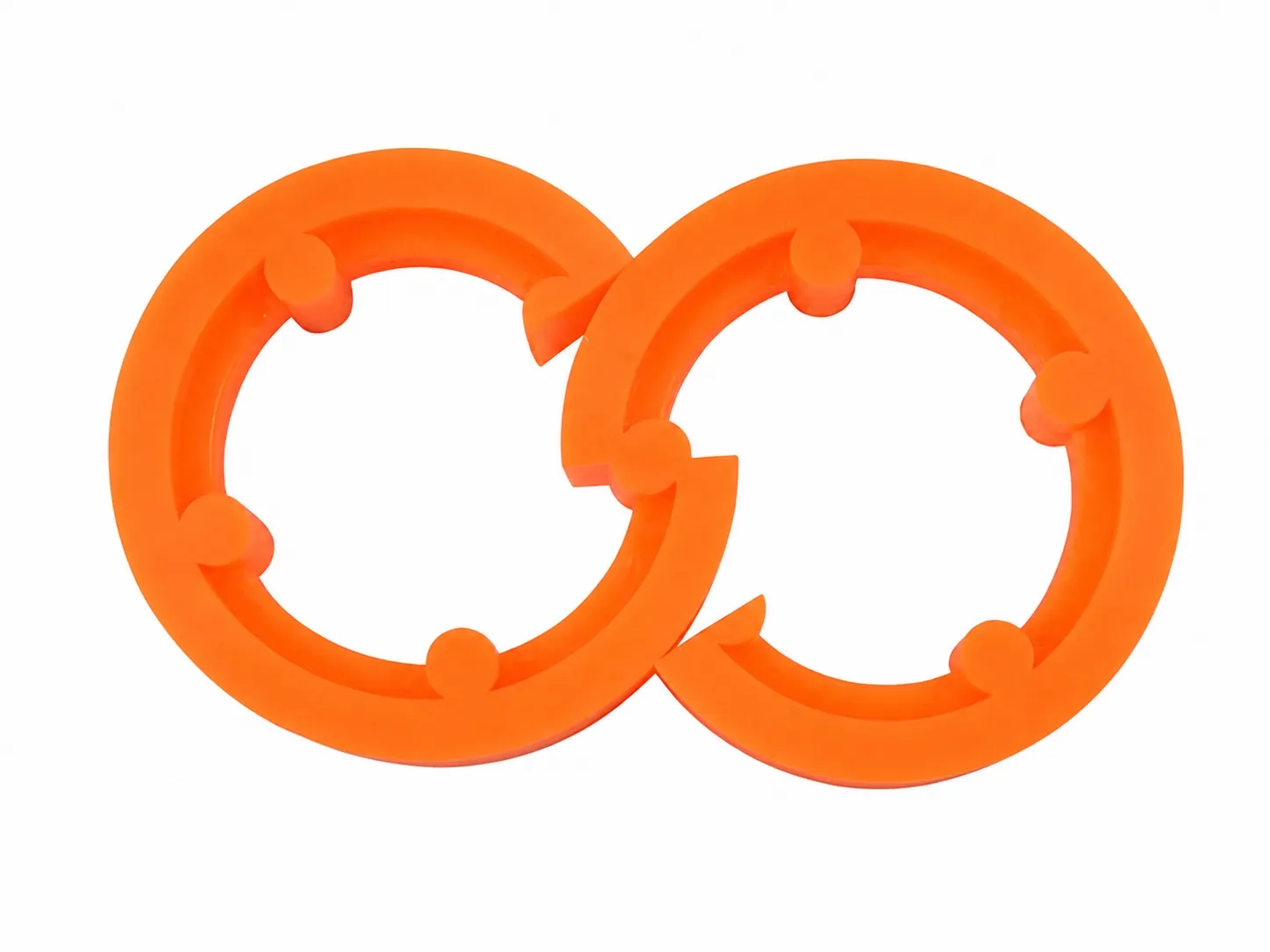
Lead edge feed wheels grip the front area of a corrugated sheet and accelerate it into the next machine section. Because this happens repeatedly at production speed, a small difference in wheel diameter, contact or timing can become a visible registration problem. A correct diagnosis separates wheel condition from upstream stack and machine-setting causes.
Symptom 1: Intermittent Misfeed or No Feed
Inspect the working surface for paper dust, oil, glaze and local damage. Confirm that all required wheels contact the sheet and rotate freely. Check outside diameter against an unworn reference, then review pressure, feeder height, vacuum or air-assist condition and sheet presentation. A new wheel will not correct a blocked vacuum path or incorrect feeder setting.
Symptom 2: Sheets Enter at an Angle
Sheet skew commonly follows unequal contact from left to right. Compare outside diameter, hardness, wear, pressure and mounting position across the feeding width. Check for a loose wheel, damaged bearing, shaft runout or mixed wheel specifications. Also confirm that the stack guides are square and the sheet is presented consistently.
Symptom 3: Double Feeding
Double feeding may involve feeder-gap settings, vacuum or air control, sheet flatness, board condition and timing as well as wheel grip. Record whether the problem occurs with one board grade, at one speed or across all production. Avoid increasing wheel pressure without checking whether the additional compression damages the lower sheet.
Symptom 4: Registration Changes During the Run
Look for heat-related changes, contamination buildup, loose mounting, wheel movement, inconsistent vacuum and gradual polishing of the contact surface. Compare cold-start performance with stable production. If registration changes only after speed increases, record speed, board grade and the exact point at which variation begins.
Symptom 5: Wheels Wear Unevenly or Lose Surface Profile
Check whether one wheel carries more pressure, contacts a guide or runs on a different sheet area. Measure multiple points around the circumference and across the wheel width. A wheel reproduced from a worn sample should be compared with machine data or an unworn part so wear is not mistaken for the original profile.
Wheel-Set Checks
Feed wheels that share one sheet should be reviewed as a set. Record the outside diameter and working width of each position. Mixed materials, different hardness values or unequal wear can change contact and surface speed. If only one wheel is being replaced, confirm that it will match the remaining wheels closely enough for the application.
Machine Checks Before Changing Wheel Material
- Clean the feeder and wheel surfaces.
- Verify stack guides, feeder gap and sheet presentation.
- Check vacuum, air paths and timing according to the machine procedure.
- Compare wheel pressure, height and alignment across the width.
- Inspect shafts, bearings, hubs, drive pins and retaining parts.
- Run a controlled test with the same board grade and record the symptom.
Information Needed for a Replacement Review
- Machine brand, model, year and feeding position
- Outside diameter, bore, width and hub details
- Drive pins, keyway, holes or bearing information
- Surface groove, slot or tooth profile
- Hardness and material, if known
- Quantity and number of wheels working as one set
- Photos of every side and the installed position
- Description or video of misfeed, skew, double feed or registration variation
Confirm Geometry Before Copying a Worn Wheel
A physical sample is valuable for complex hubs, pin layouts and surface profiles, but worn diameter and rounded features should not automatically become the new specification. JUNSHIDA can compare sample evidence with machine details, drawings and operating symptoms before production.
Frequently Asked Questions
Why does a lead edge feeder send sheets in at an angle?
Check for unequal wheel diameter, wear, hardness, pressure or mounting across the feeding width. Stack alignment, shaft condition and wheel-set consistency can also create sheet skew.
Can new feed wheels solve every intermittent misfeed?
No. Vacuum, air paths, feeder gap, timing, sheet presentation, bearings and contamination should be checked with wheel condition before replacement.
Should lead edge feed wheels be replaced as a set?
Wheels sharing the same sheet should be compared as a set. Whether all need replacement depends on diameter, wear, hardness, pressure and the machine arrangement.