
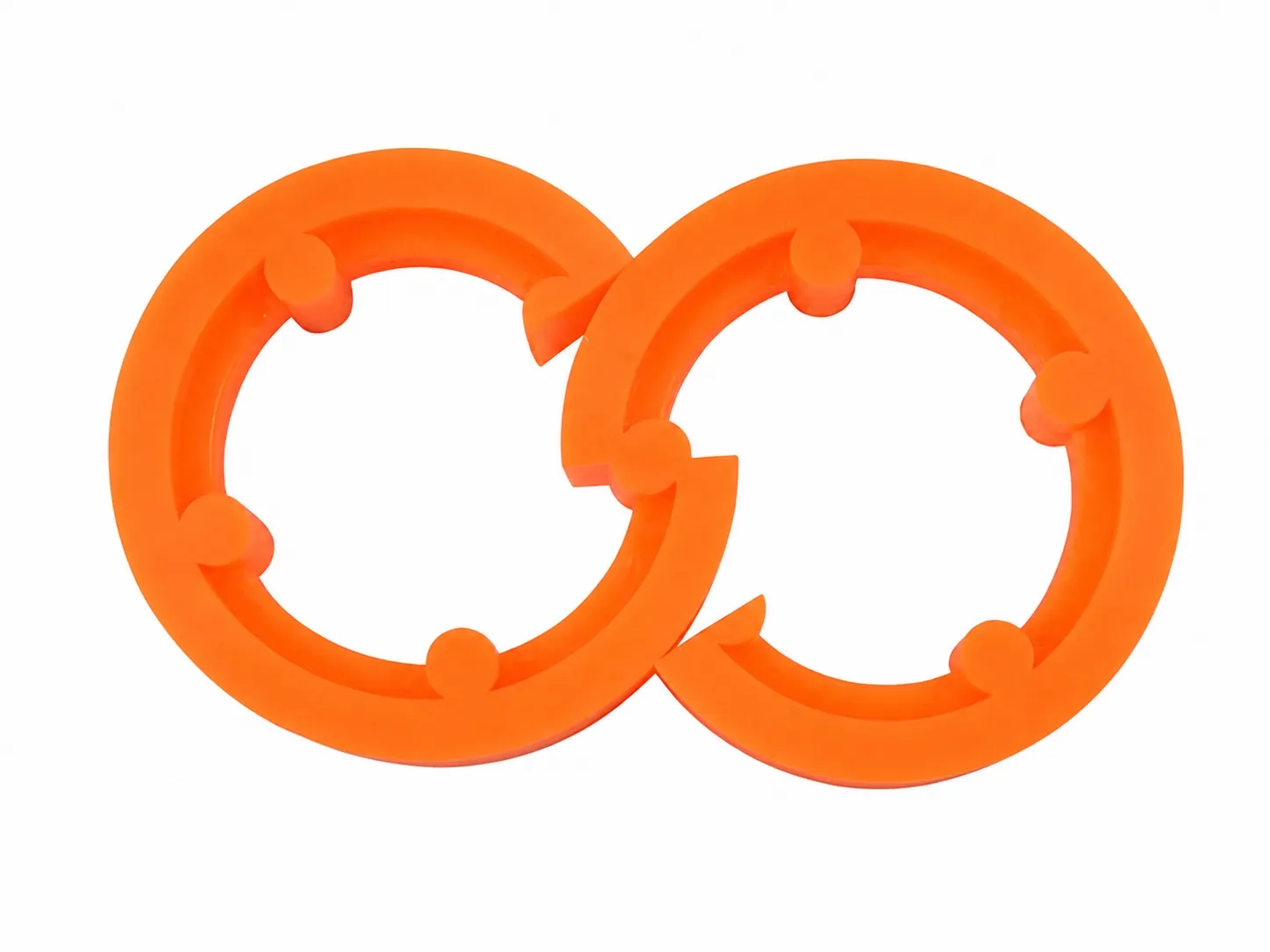
Lead edge feeder wheels are used at the first feeding position of many corrugated flexo printer slotters and rotary die cutters. Their job is to grip and advance the sheet consistently without introducing skew, marking or timing variation. When an original part number is unavailable, the safest replacement process combines measurements, machine details and evidence from the current wheel.
Information to Collect Before Requesting a Quote
Start with the machine brand, model, working width and installation position. Record any OEM or supplier number visible on the wheel, drawing or maintenance record. Then provide clear photographs of the complete wheel, both sides, the bore or hub, drive pins and the working surface.
Do not rely on machine model alone. Machines may have been rebuilt, shafts may differ between production years and a previous owner may have changed the feeding assembly.
1. Outside Diameter
Measure the outside diameter across an unworn part of the wheel. A heavily worn wheel can be smaller than its original specification, so compare several positions and note the amount of wear. Unequal diameters across one shaft can create uneven contact and sheet skew.
2. Bore, Hub and Keying
Confirm the bore diameter and whether the wheel fits directly on a shaft, bearing, sleeve or metal hub. Record keyways, flats, splines, shoulders and retaining features. For wheels with bearings, include the bearing code and the overall installed width.
3. Total Width and Working Width
Measure the full axial width and identify any narrower contact band. Also record left and right hub projections. A wheel that is correct in diameter but wrong in width may interfere with adjacent parts or sit in the wrong feeding position.
4. Drive Pins and Mounting Holes
For pinned wheels, record pin diameter, exposed length, center-to-center distance and the pin circle or offset from the bore. For mounting holes, provide hole diameter, quantity, spacing and whether the holes are threaded, counterbored or through-holes. A straight-on photograph with a ruler helps confirm the pattern.
5. Surface Profile
The working surface may be smooth, grooved, slotted, toothed or molded with a machine-specific pattern. Photograph the profile from the front and side. Measure groove pitch and depth where practical. The profile should be matched to the feeding duty rather than selected only by appearance.
6. Polyurethane Hardness
Hardness affects deformation, grip and wear behavior. A softer surface can increase conformability, while a harder surface can resist deformation under load. The correct selection depends on feeding pressure, board grade, surface coating, speed and the number of wheels sharing the load. If the current hardness is unknown, describe the operating problem instead of guessing a value.
Why Lead Edge Feed Wheels Slip
Slipping is not always caused by low friction in the polyurethane. Check for board dust, ink or oil on the wheel; a polished or hardened working surface; reduced diameter from wear; unequal pressure across the shaft; incorrect wheel height; bearing drag; shaft runout; and inconsistent sheet presentation. Cleaning or alignment may solve the problem without changing material.
Why Sheets Feed at an Angle
Skew can result from wheels with different diameters, hardness or wear levels; uneven pressure from one side to the other; mismatched replacement wheels; loose mounting; or variation in the incoming stack. Inspect the wheels as a set. Replacing one wheel without comparing the others can preserve the original imbalance.
When a Physical Sample Is Worth Sending
A sample is recommended for complex pin layouts, special hubs, unclear surface patterns or assemblies with no reliable drawing. Mark the machine side and rotation direction before shipping. If the sample is badly worn or damaged, include machine measurements so the original geometry can be reviewed rather than copied blindly.
Replacement Quote Checklist
- Machine brand, model and feeding position
- Outside diameter and total width
- Bore, hub, keyway or bearing details
- Pin and hole dimensions
- Surface profile photographs
- Hardness, if known
- Required quantity
- Current feeding problem
- Drawing or physical sample, if available
Request a Focused Replacement Review
JUNSHIDA manufactures custom polyurethane lead edge feed wheels from confirmed dimensions, drawings or physical samples. Send the checklist above to reduce back-and-forth and identify the correct structure before production.
If the current feeder slips, double-feeds or sends sheets at an angle, use the lead edge feeder misfeed and sheet-skew checklist before assuming that wheel hardness is the only cause.