
Polyurethane anvil covers are not selected by colour or outside appearance alone. The working surface, backing, locking structure and dimensions must suit the rotary die-cutting cylinder. Casting is one stage in a longer production route that turns a confirmed machine specification into a replacement component.
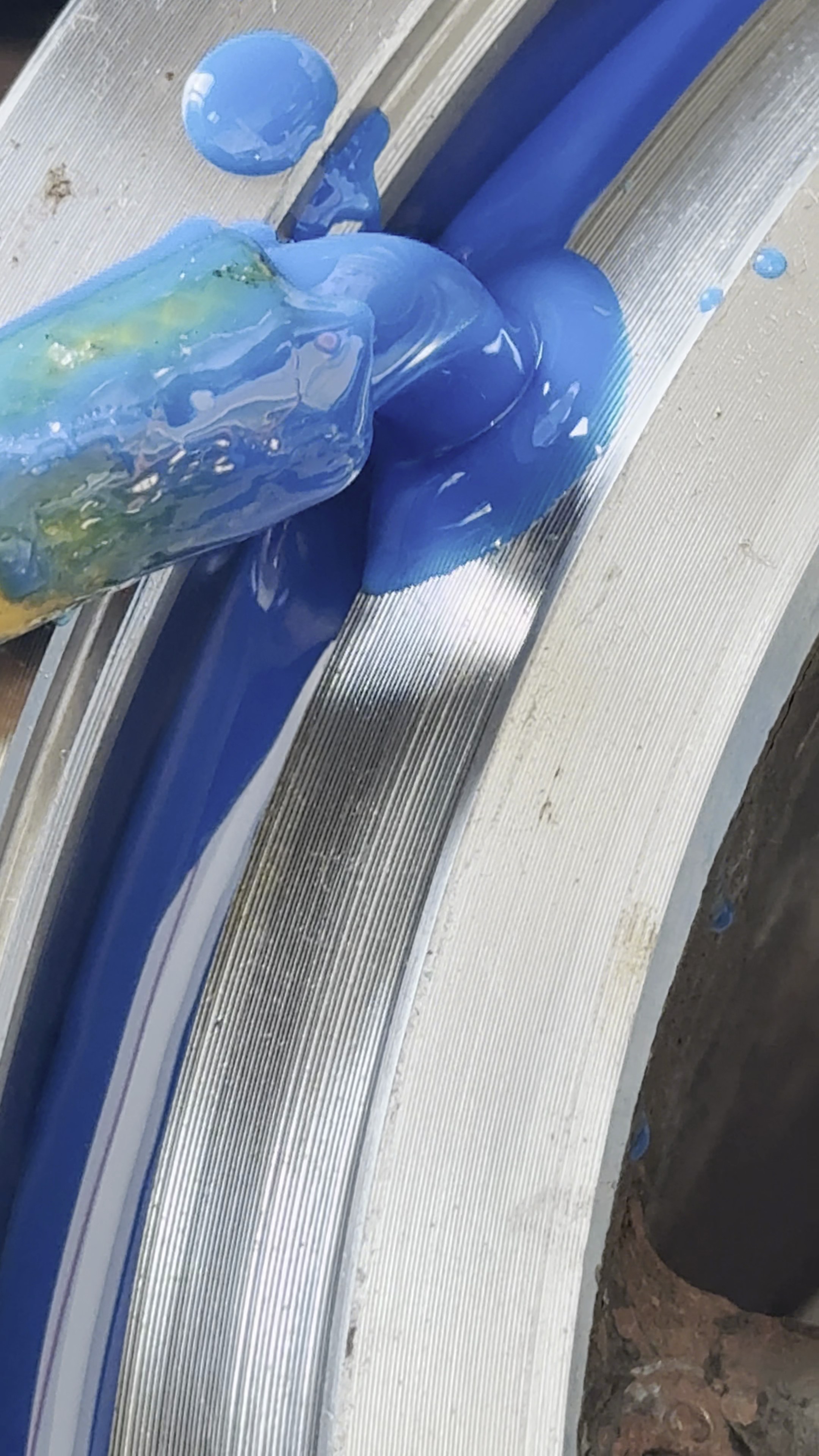
The video on this page shows a blue polyurethane material being worked into a circular mould in our workshop. It is a process view: the part still needs demoulding, trimming, machining and inspection before it can be treated as a finished replacement cover.
Workshop video: blue polyurethane material being applied inside a circular mould. The footage is a manufacturing demonstration, not a customer-machine performance test.
1. Start With the Confirmed Cover Structure
Before material is cast, the supplier needs the machine and cover information that defines the mould and final geometry. Useful inputs include the machine model, cylinder diameter, cover width and thickness, slot dimensions, joint profile and whether the replacement uses a steel-backed or finger-lock structure.
A drawing or physical sample can be especially important when the original cover is worn or when a machine has been rebuilt. A mould made from an uncertain worn dimension can produce a part that looks correct but does not seat correctly on the cylinder.
2. Fill and Work the Material Into the Mould
In the video, the blue material is worked into a circular mould with a hand tool. This visible step helps distribute the material through the moulded profile and around the working area. The exact filling and processing route depends on the material system, part geometry and production setup.
The video should not be read as a universal recipe. Colour, visible flow or a short clip cannot identify hardness, cure schedule, formulation or final tolerances. Those details are confirmed through the production specification and inspection records.
3. Demoulding Is Not the End of Production
After the material has completed the required curing stage, the cast part can be removed from the mould. Excess material may need trimming, and the part may require machining or finishing to achieve the specified width, thickness, joint and backing details.
For a rotary die-cutting cover, the connection area deserves particular attention. A finger-lock profile must interlock cleanly; a steel-backed cover must match the backing and cylinder slot. These details affect installation and replacement, not just appearance.
4. Inspect the Dimensions Before Shipment
Dimensional inspection should compare the finished part with the confirmed drawing, sample or machine data. Depending on the order, the review may cover width, thickness, cylinder fit, slot or locking details, surface condition and the consistency of a complete set.
When a customer is replacing a worn cover, it is useful to retain the confirmed production reference for future repeat orders. This reduces the risk of re-measuring the same machine from scratch every time a replacement is needed.
What to Send for a Casting-Based Replacement Quote
- Machine brand and model
- Cylinder diameter and usable cover width
- Current cover thickness and locking structure
- Clear photos of the installed cover, both ends and inner backing
- Drawing or physical sample, if available
- Quantity, delivery country and current operating issue
For the full measurement sequence, see our polyurethane anvil cover measurement guide. You can also review our custom anvil cover options before sending an inquiry.
Send Your Current Cover Details
Share the machine model, dimensions and photographs of the existing cover. We can review the mould, locking structure and replacement information before confirming production details.
The workshop video documents one casting stage; final fit and specifications are confirmed for each inquiry.