
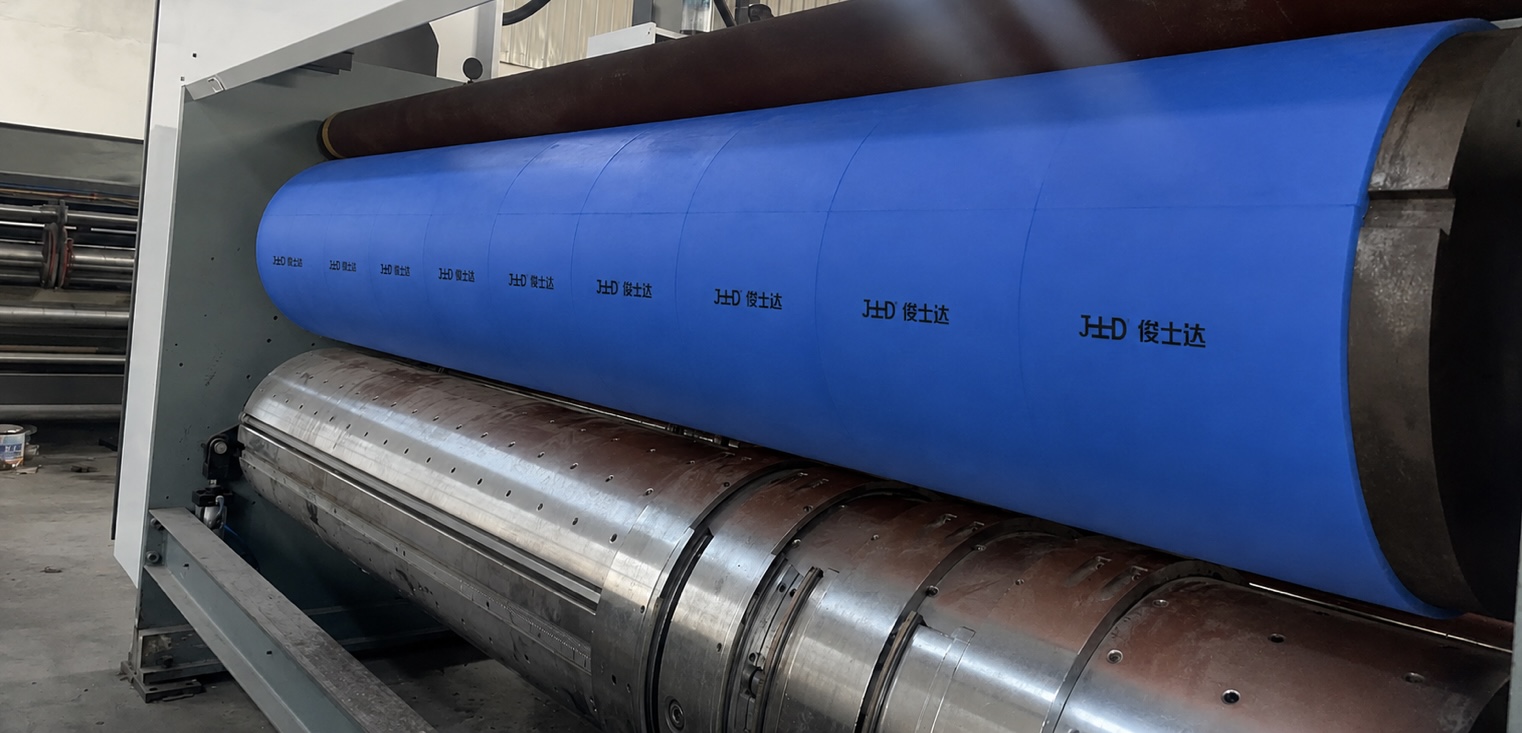
When it is time to replace the polyurethane anvil cover on your rotary die cutter, one of the first decisions is the locking structure: steel-backed or finger-lock.
Both options provide a resilient, wear-resistant cutting surface that protects the die and supports consistent cut quality. The difference is how the cover attaches to the anvil cylinder, which affects setup time, stability and long-term production cost.
What Are Anvil Covers and Why Does the Locking Structure Matter?
The anvil cover, also called a die-cutting blanket or cutting pad, wraps around the anvil cylinder on a rotary die cutter. As corrugated board passes between the die cylinder and anvil cylinder, the die cuts through the board and presses against the anvil cover.
The locking structure directly affects:
- Ease of installation and removal
- Stability during high-speed operation
- Dimensional consistency over time
- Changeover speed during production
Steel-Backed Anvil Covers
Steel-backed anvil covers use a metal backing plate, typically spring steel, bonded to the polyurethane cutting surface. The metal backing provides a rigid and dimensionally stable base for demanding cutting conditions.
Key Features
- Metal backing plate: spring steel or similar material bonded to the polyurethane.
- Locking mechanism: usually a T-slot or hook-style lock that engages with matching cylinder slots.
- Installation: slides into the cylinder locking channels and is secured in place.
Advantages
Exceptional dimensional stability. The metal substrate helps prevent stretching, contraction and shifting during high-load operation. This supports more consistent cut depth across the machine width.
Ideal for continuous, high-speed production. For long production runs and high-volume box plants, steel-backed covers handle repetitive impact while keeping the locking structure stable.
Strong resistance to side movement. The rigid backing keeps the cover seated in the locking channel and reduces the risk of lateral drift on wider machines.
Best Suited For
- High-volume corrugated box production
- Continuous, long-running jobs
- Wide die cutters where stability is critical
- Heavy-duty applications with aggressive die pressure
Finger-Lock Anvil Covers
Finger-lock anvil covers, also called interlocking or quick-change covers, use an all-polyurethane design. The locking structure uses interlocking profiles on the cover ends that connect when wrapped around the cylinder.
Key Features
- All-polyurethane construction: no metal substrate.
- Interlocking finger design: molded tabs and recesses mate during installation.
- Installation: wraps around the cylinder and locks into place quickly.
Advantages
Faster installation and removal. Without metal backing or T-slot alignment, finger-lock covers can reduce changeover time.
Lower initial cost. The all-polyurethane construction is often more economical per unit, especially for smaller widths.
Good flexibility for routine production. For standard production runs with moderate speeds and pressures, finger-lock covers can deliver reliable cutting performance.
Best Suited For
- Operations that frequently change between short-run jobs
- Smaller-width die cutters
- Production where quick cover changes reduce downtime
- Standard box styles and moderate run lengths
Head-to-Head Comparison
| Factor | Steel-Backed | Finger-Lock |
|---|---|---|
| Dimensional Stability | Excellent. Metal backing helps prevent stretching. | Good. All-PU construction can flex under high load. |
| Installation Time | Longer. Slides into T-slot or locking channel. | Faster. Wraps and locks into place. |
| High-Speed Stability | Superior for demanding continuous runs. | Good for moderate speeds and routine work. |
| Initial Cost | Higher due to metal backing and bonding process. | Lower with all-PU construction. |
| Service Priority | Long-run consistency and stability. | Fast changeover and flexibility. |
A Practical Decision Framework
1. What is your typical run length?
If you regularly run long shifts on the same job, steel-backed covers offer better long-term stability. If you change jobs several times per shift, finger-lock covers can reduce setup time.
2. What machine width are you running?
On wider die cutters, steel-backed covers provide valuable stability, especially at higher speeds. On narrower machines, finger-lock covers are often suitable for routine production.
3. What is your production priority?
If the priority is minimizing cost per cutting hour on long, consistent runs, steel-backed is often the stronger route. If the priority is flexibility and quick changeover, finger-lock may be the better fit.
Customization Options
Regardless of the locking structure, polyurethane anvil covers can be customized around your machine and application. JUNSHIDA can work from machine model, drawings, dimensions, hardness requests or current-part samples.
- Custom dimensions: width, thickness and slot dimensions matched to the machine.
- Custom hardness: softer or harder compounds depending on board and cutting load.
- Custom slot patterns: slot width, depth and spacing matched to production requirements.
- Sample matching: replicate an existing cover's dimensions and structure.
Summary
| Application | Recommended Route |
|---|---|
| High-volume, long-run production | Steel-backed |
| Frequent job changeover | Finger-lock |
| Wide die cutters | Steel-backed |
| Narrow machines and standard boxes | Finger-lock |
| Heavy-duty or aggressive die pressure | Steel-backed |
Need Help Choosing?
Send your machine model, cover dimensions and a short note about your typical production runs. JUNSHIDA will review the application and recommend a suitable structure.