
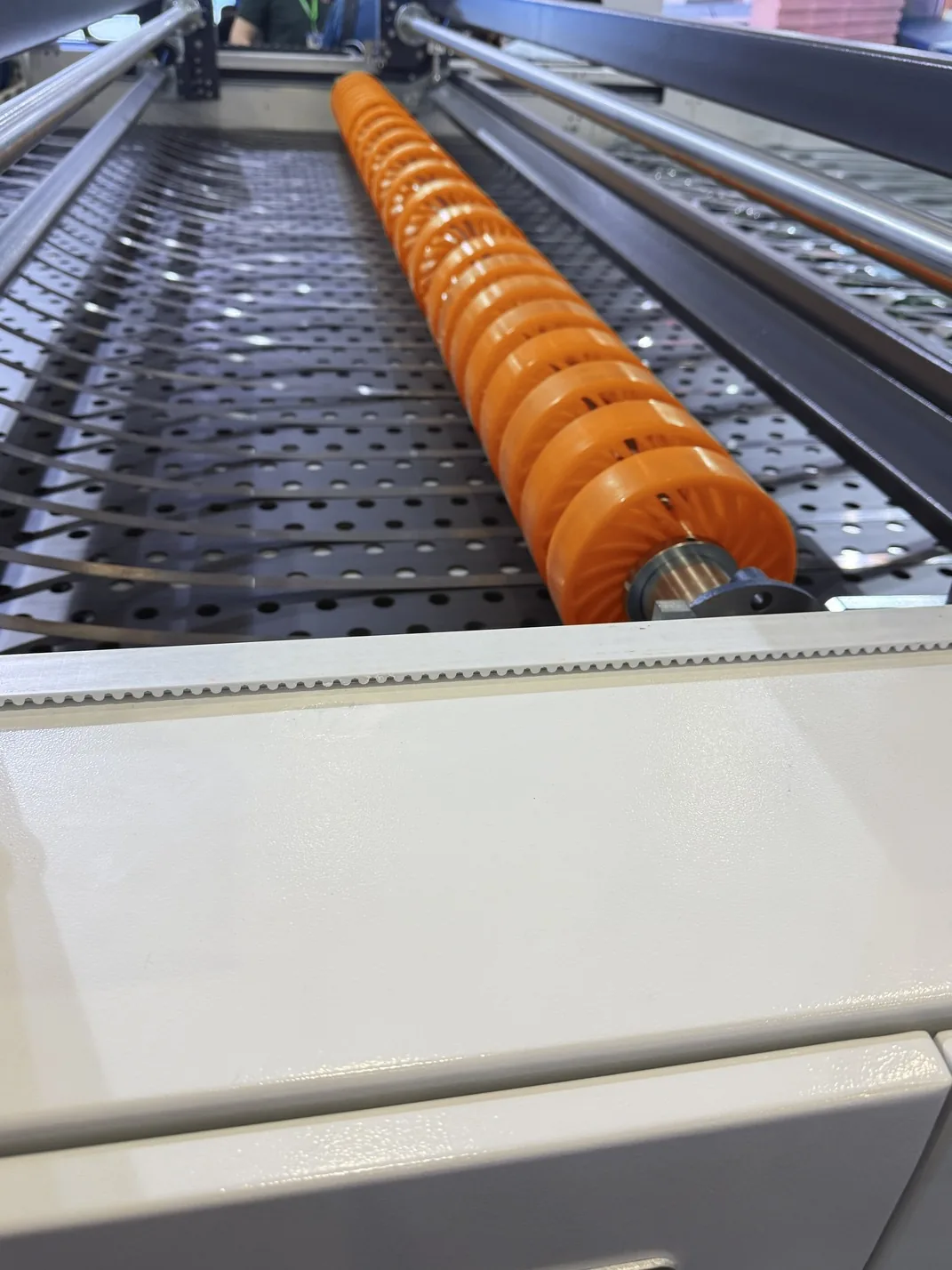
Polyurethane sun wheels and no-crush wheels support corrugated board as it moves through feeding, printing, slotting, folding or conveying positions. If a sheet slips, skews, receives pressure marks or loses flute height, the wheel is only one part of the contact system. Diagnose the position before selecting a different hardness or profile.
Symptom 1: The Wheel Turns but the Board Slips
First clean paper dust, ink mist, oil and adhesive residue from the working surface using a method approved for the machine. A polished or contaminated surface can lose grip. Then check whether the wheel reaches the board consistently, whether its outside diameter has worn below adjacent wheels and whether bearings or shafts are restricting rotation.
Symptom 2: Corrugated Board Is Crushed or Marked
Excessive compression, an unsuitable contact profile, a wheel that is too wide for the intended support position, incorrect height or poor alignment can concentrate force. Check the pressure setting and compare marks with each wheel location. Do not assume that selecting the softest material will solve a mechanical over-compression problem.
Symptom 3: Sheets Drift or Feed at an Angle
Compare wheel diameters, wear levels, hardness and pressure across the machine width. Mixed old and new wheels can create unequal surface speed or contact. Also inspect wheel spacing, shaft alignment and the condition of the incoming sheet stack. Replace or adjust wheels as a coordinated set when the position requires matched contact.
Symptom 4: Lobes Tear or Wear Prematurely
Check for interference with guides, sharp edges, abnormal heat, chemical contamination and excessive deformation. Record whether wear occurs on every lobe, one side of the wheel or one machine position. A profile copied from a heavily worn sample may also reproduce the wrong geometry.
Symptom 5: The Wheel Leaves Repeating Marks
Repeating marks can follow the wheel pitch or a damaged lobe. Inspect the complete circumference for flat spots, cuts, embedded debris and profile variation. Confirm that the wheel is concentric on the shaft and that the mounting structure does not allow movement during operation.
Inspection Sequence Before Replacement
- Clean the wheel and retest the same board under controlled settings.
- Measure outside diameter, width and bore, then compare all wheels in the position.
- Check pressure, height, alignment, bearing freedom and shaft condition.
- Photograph the lobe, slot or no-crush profile from the front and side.
- Record the board grade, speed and exact defect location.
- Confirm whether wheels should be replaced individually or as a matched set.
Do Not Select Hardness from Color Alone
Color is not a universal hardness or material standard. The suitable polyurethane specification depends on deformation, grip, load, speed, board surface and wheel geometry. If the original hardness is unknown, send a sample and describe the operating fault instead of choosing a value by appearance.
Replacement Information Checklist
- Machine brand, model and installation position
- Outside diameter, bore and total width
- Lobe quantity, slot width and detailed surface profile
- Keyway, hub, bearing or mounting details
- Current hardness, if known
- Photos of installed wheels and worn areas
- Board grade and the slipping, crushing or marking symptom
- Required quantity and whether a matched set is needed
Use the Fault Evidence to Confirm the New Wheel
JUNSHIDA manufactures custom polyurethane sun wheels and no-crush wheels from confirmed dimensions, drawings or physical samples. Combining measurements with the actual board symptom reduces the risk of reproducing an unsuitable worn part.
Frequently Asked Questions
Why do polyurethane sun wheels slip on corrugated board?
Common checks include surface contamination, polished wear, reduced diameter, insufficient or uneven contact pressure, bearing drag, shaft alignment and mismatched wheels across the machine width.
Will a softer sun wheel always prevent board crushing?
No. Board crushing can also result from excessive pressure, incorrect height, wheel width, profile or alignment. Confirm the mechanical contact before changing hardness.
Can sun wheel hardness be identified by color?
Color is not a universal hardness standard. Use a hardness reading, original specification or physical sample together with machine and application information.