Corrugated Board Conveying
Transport positions that require stable friction and continuous sheet movement.
Factory-made replacement wheels for corrugated board conveying and gentle contact, customized from dimensions, hardness, surface profile, drawing or sample.
Manufacturer review: send the outer diameter, bore, width, hardness, quantity and wheel photos. Open the quote checklist.
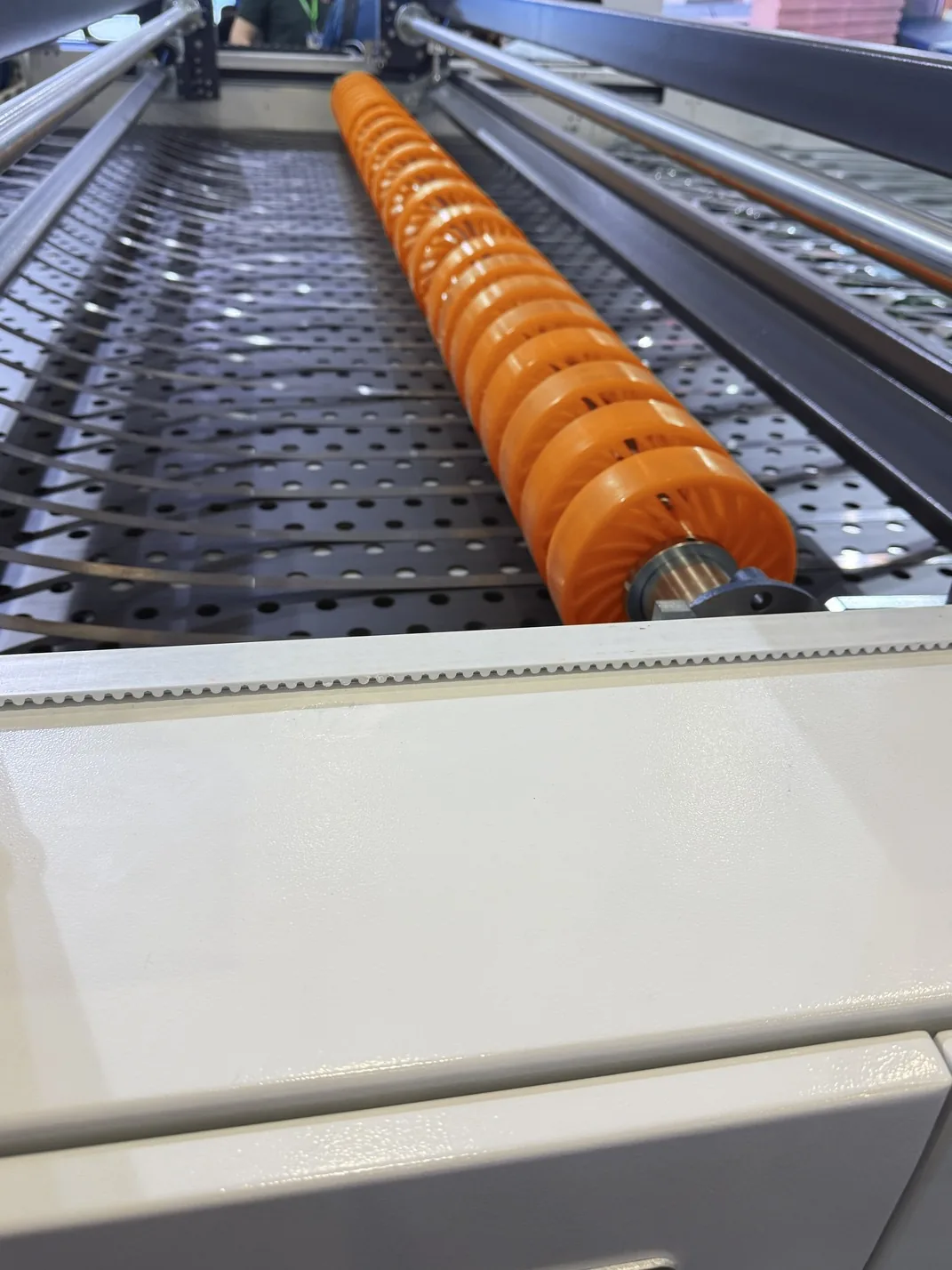
Polyurethane sun wheels and no-crush wheels are used where corrugated board needs to move with controlled contact. JUNSHIDA develops replacement wheels around the original part, machine details or a confirmed drawing.
Final dimensions, hardness and profile are confirmed before quotation and production.
Polyurethane sun wheels are used where stable friction and suitable elasticity are needed. Compared with rigid components, the polyurethane contact can maintain conveying force while helping reduce pressure marks and crushing on corrugated board.
Transport positions that require stable friction and continuous sheet movement.
Machine sections designed to guide or feed board with reduced compression.
Forming, printing and die-cutting machinery for corrugated packaging.
Conveying and guide systems that need elastic, controlled contact.
Custom replacements developed from old wheels, drawings, photos or samples.
Equipment positions that require dependable traction with resilient contact.
Buyers use several names for this family of compliant conveying wheels. The name alone does not confirm interchangeability, so the wheel profile, dimensions, hardness and mounting structure should always be checked against the original machine position.
Common sourcing terms for lobed polyurethane wheels used to convey, guide or hold corrugated board. Confirm the lobe count, outside diameter, width and bore rather than ordering by name alone.
Terms used for flexible-contact wheels intended to move sheet material while limiting concentrated pressure. Suppliers may also call them soft-touch wheels, no-crush rollers or urethane spacer wheels.
These wheels may appear at transfer, stacker, slitter-scorer or cut-off positions on corrugated board lines. Send the exact machine section because profiles and operating conditions vary.
If the current wheel leaves marks, document the board grade, flute, contact pressure and worn profile. Hardness and geometry must be reviewed together; a softer wheel is not automatically the correct answer.
Check surface wear, contamination, wheel diameter consistency, shaft alignment and contact pressure. Photos of the installed set help distinguish a replacement-wheel issue from a machine-setting issue.
Provide outer diameter, bore, face width, lobe or groove pattern, hub or bearing structure, quantity, machine model and operating position. A drawing or physical sample is best for complex profiles.
A sun or no-crush wheel normally emphasizes compliant conveying and guiding. A lead edge feed wheel is built around the feeder connection, contact face and geometry that introduce sheets into a printer, slotter or die cutter. Similar color or diameter does not make the two parts interchangeable.
For terminology and measurements, read the sun wheels vs. no-crush wheels guide. If the current set slips or marks the board, use the slipping and board-crushing troubleshooting guide.
Clear measurement photos and a reference sample help reduce uncertainty during the quotation stage.
Share the machine position, model and current wheel photos.
Confirm diameter, bore, width and mounting details.
Confirm hardness, quantity and operating requirements.
Proceed with molding, finishing, inspection and packing.
You can measure the current wheel or send a physical sample so we can confirm the correct configuration.
Measure the maximum outside diameter of the wheel.
Measure the center hole, bearing bore or hub connection dimensions.
Measure the complete width of the wheel.
Photograph the slots, teeth, grooves or contact-surface shape clearly.
Confirm whether the wheel uses a bearing, hub, bore or special installation structure.
If hardness is unknown, provide the machine position and board type for review.
Send front, side and back photographs together with the required quantity.
Most polyurethane sun wheels are customized according to the machine model, original component, drawing or physical sample.
Yes. Slots, grooves, teeth and contact-surface shapes can be confirmed from photographs, drawings or a physical sample.
Yes. Hardness can be selected according to board-conveying pressure, friction requirements and the installation position.
Provide the outer diameter, inner diameter, width, surface pattern, mounting structure, quantity and clear photographs of the current wheel.
Yes. Bearing, hub, bore and other mounting structures can be confirmed from the actual sample or drawing.
Yes. Orange is common, and other colors can be customized according to the customer's requirement.
If the structure is simple and the dimensions are clear, photographs and measurements may be sufficient. A physical sample is recommended for complex patterns or special mounting structures.
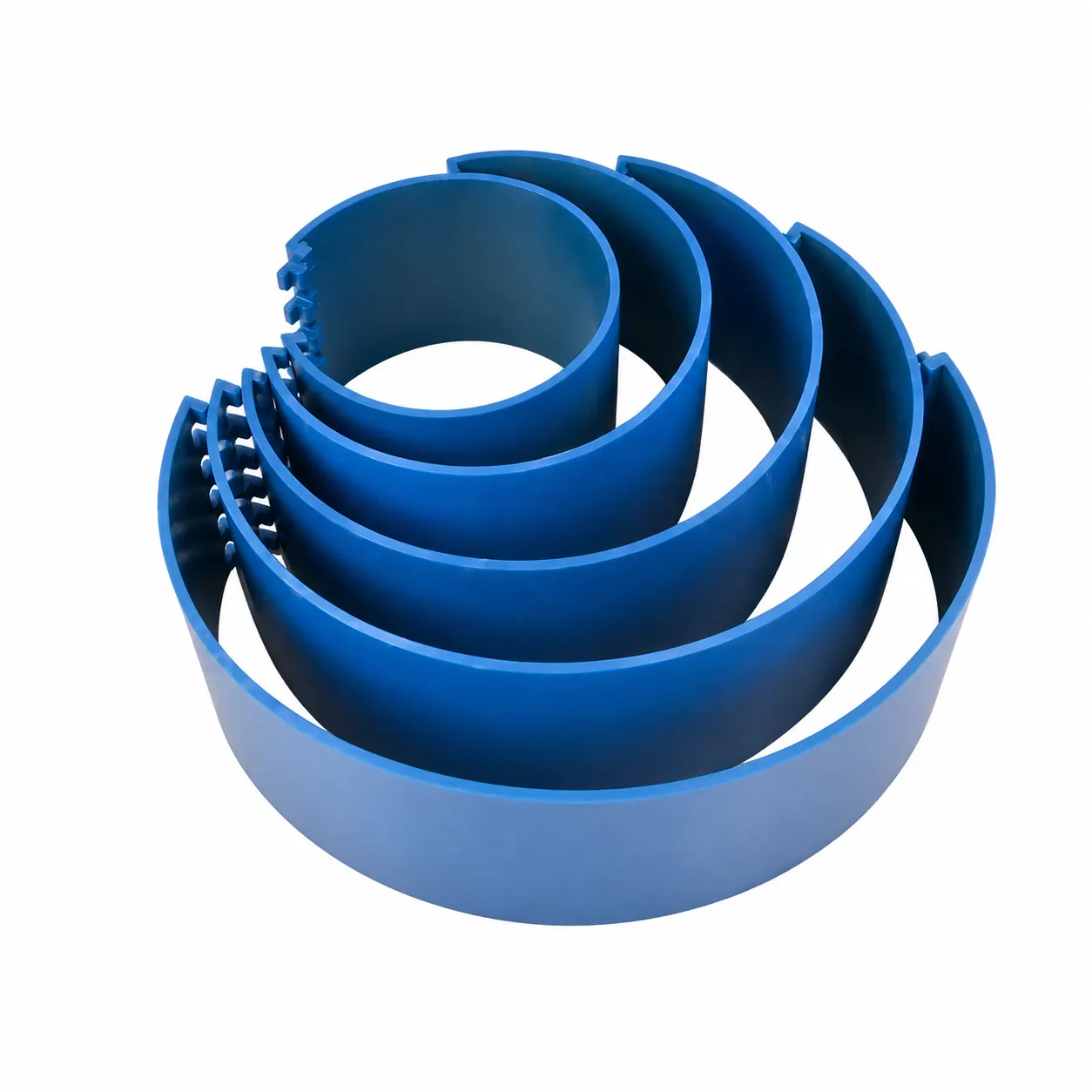
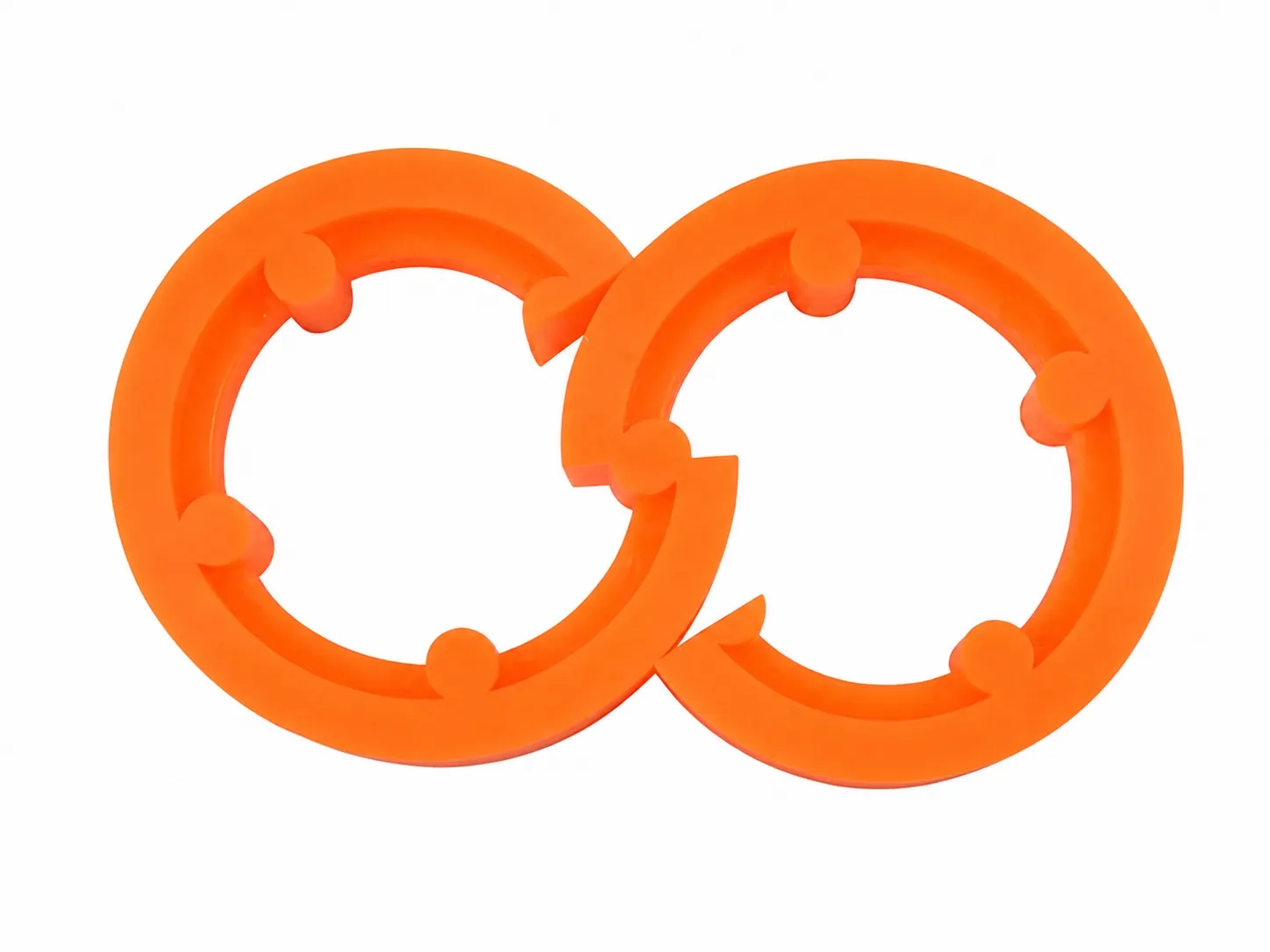
Compare terminology, dimensions, mounting structures and working symptoms before requesting a replacement.