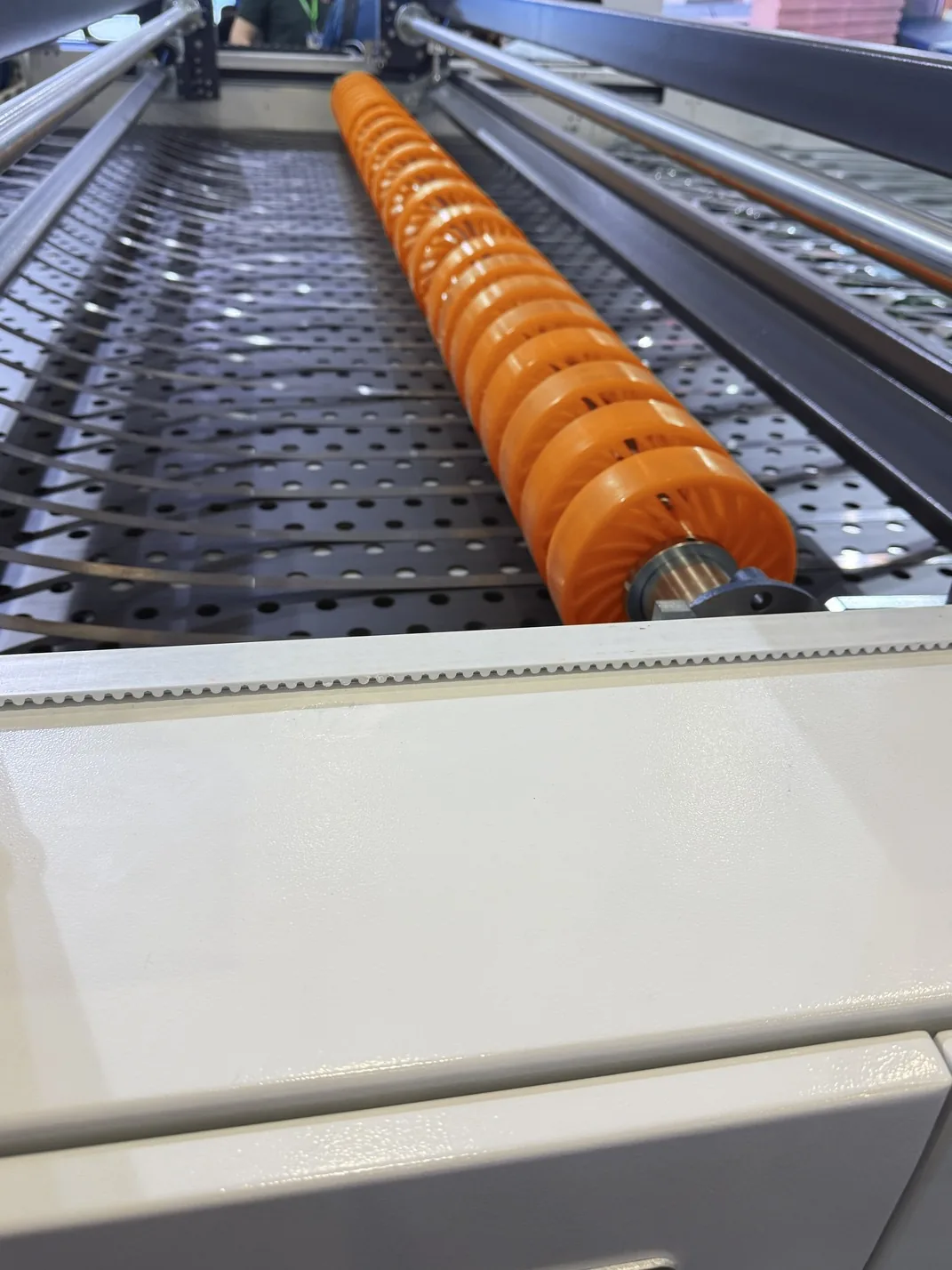
Corrugated machinery buyers use several names for elastic polyurethane wheels: sun wheel, sun feed wheel, no-crush wheel, hold-down wheel, pressure wheel and paper conveying wheel. The terms can vary by machine maker and region. Two parts with the same general name may have different lobes, bores, widths or mounting structures.
What Is a Polyurethane Sun Wheel?
A sun wheel usually has a lobed or spoke-like working profile. The flexible segments contact the board intermittently and can accommodate small changes in thickness. Depending on the machine, the wheel may guide, convey, hold down or help separate sheets.
What Is a No-Crush Wheel?
No-crush wheel is a functional description used for wheels intended to move or control board with reduced compression. Some no-crush wheels have a sun-like profile, while others use a different open or compliant geometry. The label alone does not define a universal standard.
Why the Names Are Not Enough
Ordering only by a term such as “sun wheel” creates identification risk. Confirm where the wheel is installed, what it contacts, whether it is driven or free-running, how it mounts and what problem the replacement must solve. A photograph of the wheel on the machine is often more useful than the product name.
1. Measure the Outside Diameter
Measure across the highest points of opposite lobes. If the wheel is worn unevenly, record several readings and photograph the worn area. Also confirm whether the specified diameter refers to the relaxed wheel or a wheel compressed in service.
2. Measure the Bore and Hub
Record the bore, hub diameter, hub length and any keyway, flat, bearing, metal insert or retaining feature. For split wheels or clamp-mounted designs, photograph the joint and fasteners.
3. Record Width and Lobe Geometry
Measure overall width, working width, lobe count, lobe thickness, lobe width and the shape of the contact tip. Note whether the lobes are straight, tapered, curved or offset. These dimensions affect contact pattern and flexibility.
4. Identify Surface Pattern
Some wheels have a smooth contact face; others include grooves or textures. Surface pattern should be reviewed together with board type, dust conditions, pressure and the wheel’s job. Copying a worn surface can hide the original geometry.
5. Review Hardness and Flexibility
Hardness is only one part of compliance. Lobe length, thickness and profile also determine how the wheel deflects. A wheel with the same hardness but different geometry can behave differently. Share the current hardness if known, plus any marking, crushing, slipping or wear problem.
Common Operating Problems
Board marking or compression
Check contact pressure, wheel height, lobe stiffness, alignment and whether too many wheels are concentrated in one area. The replacement should not be specified independently of the machine setting.
Slipping or unstable conveying
Inspect contamination, polished contact surfaces, insufficient pressure, unequal wheel diameters, bearing drag and board dust. A different surface or material may help, but machine condition should be checked first.
Cracked or torn lobes
Possible contributors include excessive deflection, sharp edges near the installation point, chemical exposure, heat, aging or geometry that is too thin for the load. Photograph both the failure and the installed position.
Specification Checklist
- Machine brand, model and installation position
- Outside diameter, bore and total width
- Hub, bearing, keyway or clamp details
- Lobe count and lobe dimensions
- Surface pattern
- Hardness, if known
- Driven or free-running position
- Quantity and number of wheels per shaft
- Current operating problem
- Photos, drawing or physical sample
How to Choose the Correct Replacement
Use the machine function and confirmed dimensions as the primary reference. Treat product names as search terms, not final specifications. When drawings are unavailable, combine accurate measurements with installation photos and a physical sample for complex profiles.
Request a Custom Wheel Review
JUNSHIDA manufactures polyurethane sun wheels and no-crush wheels around confirmed dimensions, drawings or samples. Send the checklist above so the mounting and working profile can be reviewed before production.