
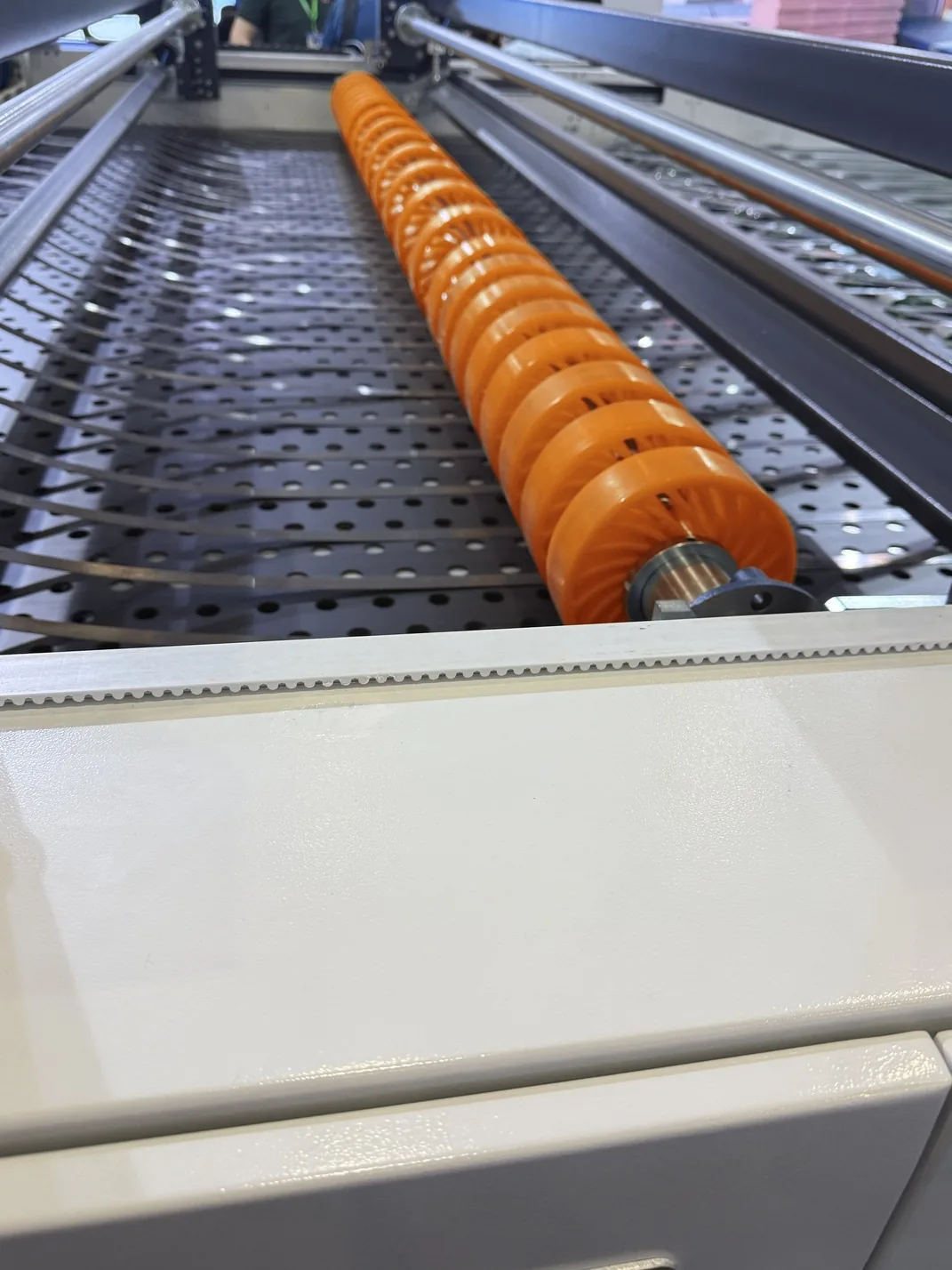
When ordering replacement polyurethane sun wheels or no-crush wheels, buyers often ask for the “right hardness.” A useful answer starts with a different question: what must the wheel do on this machine?
A wheel may need to guide a delicate sheet, hold it against a supporting surface or transmit conveying force. The replacement must fit that duty as well as the shaft. Begin with a confirmed original specification, then review any proposed hardness change against the actual operating problem.
What a Shore A value tells you
Shore hardness describes resistance to indentation under defined test conditions. Shore A is commonly used for softer elastomers; Shore D is used for harder materials. Always state the scale: “70” is incomplete, and 70 Shore A is not equivalent to 70 Shore D. Neither number is a percentage. Intertek test overview
A hardness reading does not directly establish grip, wear life or the load a finished wheel can carry. ASTM D2240 describes an indentation test, with no simple relationship between its result and a fundamental material property. Treat hardness as a controlled material characteristic, not a substitute for an application assessment. ASTM D2240
For repeat orders, retain the supplier’s confirmed hardness specification and test method. If checking an old wheel, record where and how it was measured. A reading taken from a narrow, curved or worn contact surface should not automatically be treated as equivalent to a result from a properly prepared test specimen.
Wheel geometry changes the way it deflects
The material and the finished part answer different questions. The durometer measures indentation at the surface; the complete wheel responds through its lobes, openings, rim and mounting structure.
Polyurethane compression response depends on shape and mounting conditions as well as material hardness. For a no-crush wheel, that means the drawing and profile belong in the selection discussion. Two wheels with the same nominal hardness should not be assumed to deliver the same contact force at the same displacement. Polyurethane load and deflection
For open-spoke designs, complete collapse of the spokes uses up the available compliance. Review the load and permitted deformation with the supplier and machine manufacturer. The name “no-crush” does not make every wheel suitable for every pressure setting. No-crush wheel selection principles
Rebound is a separate material property
Resilience describes how much deformation energy the material returns during recovery. Some energy is lost through internal damping and becomes heat. Polyurethane compounds can have different rebound characteristics even when their hardness is similar, and their response can change with temperature. Polyurethane resilience
For a wheel repeatedly contacting board, include operating speed, duty cycle and working temperature in the discussion. If the existing wheel performs differently after the line has warmed up, report that pattern. It is a reason to investigate the complete operating condition, rather than simply request a harder grade.
Start with the symptom before changing hardness
Use the following checks to decide what to investigate. They are starting points for diagnosis, not automatic instructions to increase or decrease hardness.
| What you observe | What to check first | What to discuss with the supplier |
|---|---|---|
| Pressure marks or crushed flutes | Contact setting, alignment, support position and wheel profile | Whether the geometry and material provide suitable compliance within the machine’s permitted settings |
| The wheel rotates but the sheet slips | Surface contamination, wear and consistent contact with the board | The board surface, current wheel specification and conditions under which traction is lost |
| Lobes crack or tear | Mechanical interference, excessive deformation and where the damage begins | Whether the failure calls for a profile or material review after mechanical causes are addressed |
| Sheets drift sideways | Wheel diameter consistency, wear, shaft alignment and contact across the machine | Whether the position requires a coordinated replacement set |
For the inspection sequence, see our sun wheel slipping and board-crushing guide. Inspect or measure only with the equipment safely isolated under the site’s maintenance procedures.
Compare replacement options in a controlled trial
When a different grade is proposed, agree on a comparison before committing to a larger replacement order. This practical trial plan helps make the result interpretable:
- Record the baseline. Identify the current wheel, board grade, machine position, speed and permitted contact setting. Note the specific defect you want to reduce.
- Separate the variables. If hardness is the intended change, keep the geometry and other conditions as consistent as practicable. Record any unavoidable differences.
- Define what counts as improvement. Compare slipping events, visible marks, feeding rejects and wheel condition over an agreed batch or operating interval.
- Check representative production. Include the board grades and operating conditions the wheel must actually handle. Record cold-start and warmed-up behavior where relevant.
- Keep the accepted specification. Save the drawing revision, material reference, hardness scale and trial conditions for future orders.
A short successful trial supports the conditions tested. A service-life claim needs a wear record over a relevant operating period, not just acceptable feeding during the first run.
What to send with a replacement-wheel inquiry
Prepare one record for each wheel type or machine position:
- Machine model, exact installation position and whether the wheel is driven or free-running.
- Outside diameter, bore, overall width, working-face width and mounting details.
- Front, side and installed photographs showing the lobes, openings, hub or bearing arrangement.
- Original hardness and scale, if documented; otherwise mark them as unknown.
- Board grade, operating speed, current problem and required quantity.
Label dimensions as drawing values, new-part measurements or worn-part measurements. Do not infer hardness from color or assume a worn profile is the intended manufacturing shape. Our no-crush wheel measurement guide explains how to organize the dimensional record.