
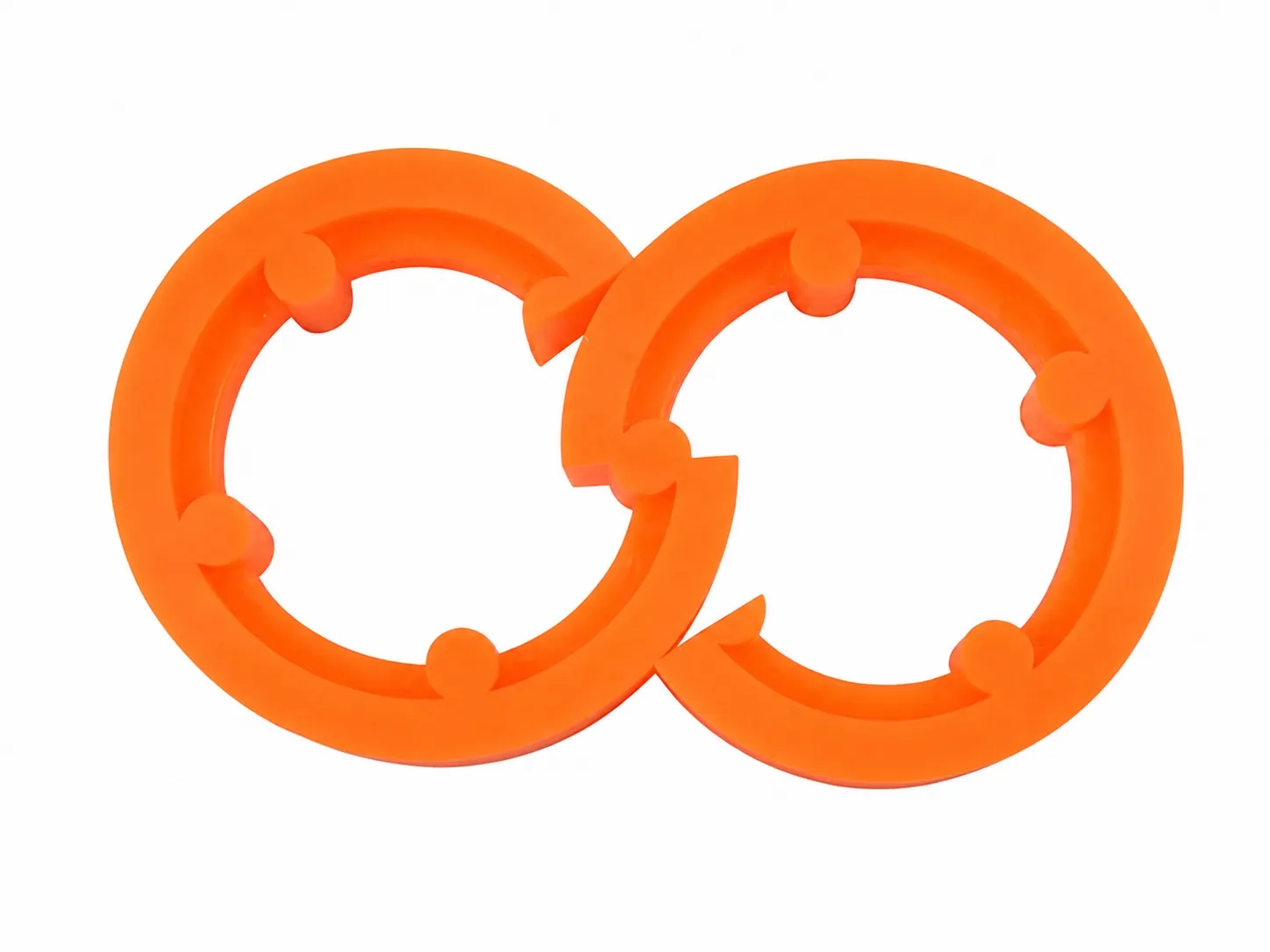
A lead edge feed wheel is usually not selected by outer diameter alone. The wheel must match the shaft or hub, drive pins, mounting holes, usable contact width and the position in the feeder. Two wheels that look similar in a photograph may not be interchangeable.
For the fastest technical review: send the machine brand and model, installation position, photographs of both sides, outer diameter, bore, overall width, pin or hole dimensions, quantity and delivery country. Add a drawing or physical sample when the hub geometry is difficult to measure.
1. Identify the Exact Wheel and Machine Position
Photograph the wheel before removal, including nearby shafts and the feeding direction. Record the machine model and mark the wheel position from the operator side. A corrugated flexo printer-slotter or rotary die cutter can use several wheel designs in one feeder, so a machine name alone may not identify the part.
2. Measure the Maximum Outer Diameter
Measure the polyurethane working diameter across the widest point with a caliper. Take readings in several directions and record the largest stable value. If the surface is flattened, tapered or heavily worn, label the result as a worn-wheel measurement; do not assume it is the original production diameter.
3. Measure Bore, Hub and Shaft Interface
Record the center bore or shaft diameter and show whether the wheel mounts directly, uses a metal or plastic hub, bearing, keyway, split structure or another interface. Measure hub outside diameter, hub length and any step or shoulder. Photograph both faces square to the camera.
4. Measure Overall Width and Working Face
Overall width includes the complete part from face to face. Working-face width is the polyurethane area that contacts the board. Record both values when a hub, recess or shoulder extends beyond the working surface. A correct diameter with the wrong face or hub width can cause misalignment.
5. Record Drive Pins and Mounting Holes
- Pin diameter and exposed height
- Number of pins or holes
- Hole diameter and depth
- Center-to-center distance or pitch-circle diameter
- Angular position relative to a keyway, slot or reference edge
- Thread specification, if threaded
Place a ruler or caliper in the photo and add a simple hand sketch. A dimensioned sketch is often clearer than several close-up images.
6. Describe the Polyurethane Working Surface
Show whether the surface is smooth, grooved, patterned, crowned or segmented. Record polyurethane thickness if the wheel has a separate core. Share hardness only when it is verified; color is not a reliable hardness or material specification. Also describe the board grade, speed and symptom if the replacement is intended to solve slipping, crushing, skew or double feeding.
7. Check a Worn Wheel Before Copying Its Dimensions
Wear can reduce diameter, round edges, enlarge holes and damage drive features. Compare several wheels from the same set, check machine documentation and identify the least-worn reference. When uncertainty remains, send the physical sample and machine details so worn dimensions are not treated as the new-part target.
8. Buyer’s Measurement and RFQ Checklist
- Machine brand, model and feeder position
- Maximum outer diameter (OD)
- Center bore or shaft diameter (ID)
- Overall width and polyurethane working-face width
- Hub diameter, length, steps and shoulders
- Drive-pin diameter, height, count and position
- Mounting-hole diameter, depth, count and spacing
- Keyway, slot, thread, bearing or split-mount details
- Surface profile and polyurethane thickness
- Quantity per position and total quantity
- Photos of the installed wheel, both faces and working surface
- Drawing or physical sample availability
- Current feeding problem and delivery destination
Download is not required: copy this list into your email or WhatsApp message and fill in every known value. Mark uncertain dimensions instead of estimating them.
9. What JUNSHIDA Reviews Before Quotation
JUNSHIDA reviews the connection structure, usable dimensions, polyurethane working surface, operating information and quantity before confirming a custom production route. When an OEM number is unavailable, we can work from a drawing, clear photographs or a physical sample, subject to dimensional verification.
For replacement planning, also read the lead edge feed wheel replacement guide. If the machine has unstable feeding, use the misfeed and sheet-skew troubleshooting guide.
Request a Custom Lead Edge Feed Wheel Review
Frequently Asked Questions
Can a replacement be made from an old lead edge feed wheel?
Yes. A physical sample can be reviewed, but worn diameter, enlarged holes and damaged drive features should be compared with machine information before the new-part dimensions are confirmed.
Which dimensions are essential for a quotation?
At minimum, provide outer diameter, bore, overall width, hub or mounting structure, pin or hole details, quantity, machine model and clear photographs of both sides.
Is wheel color enough to identify polyurethane hardness?
No. Color is not a dependable hardness or material specification. Share a verified hardness value or describe the board, pressure and feeding condition for technical review.