
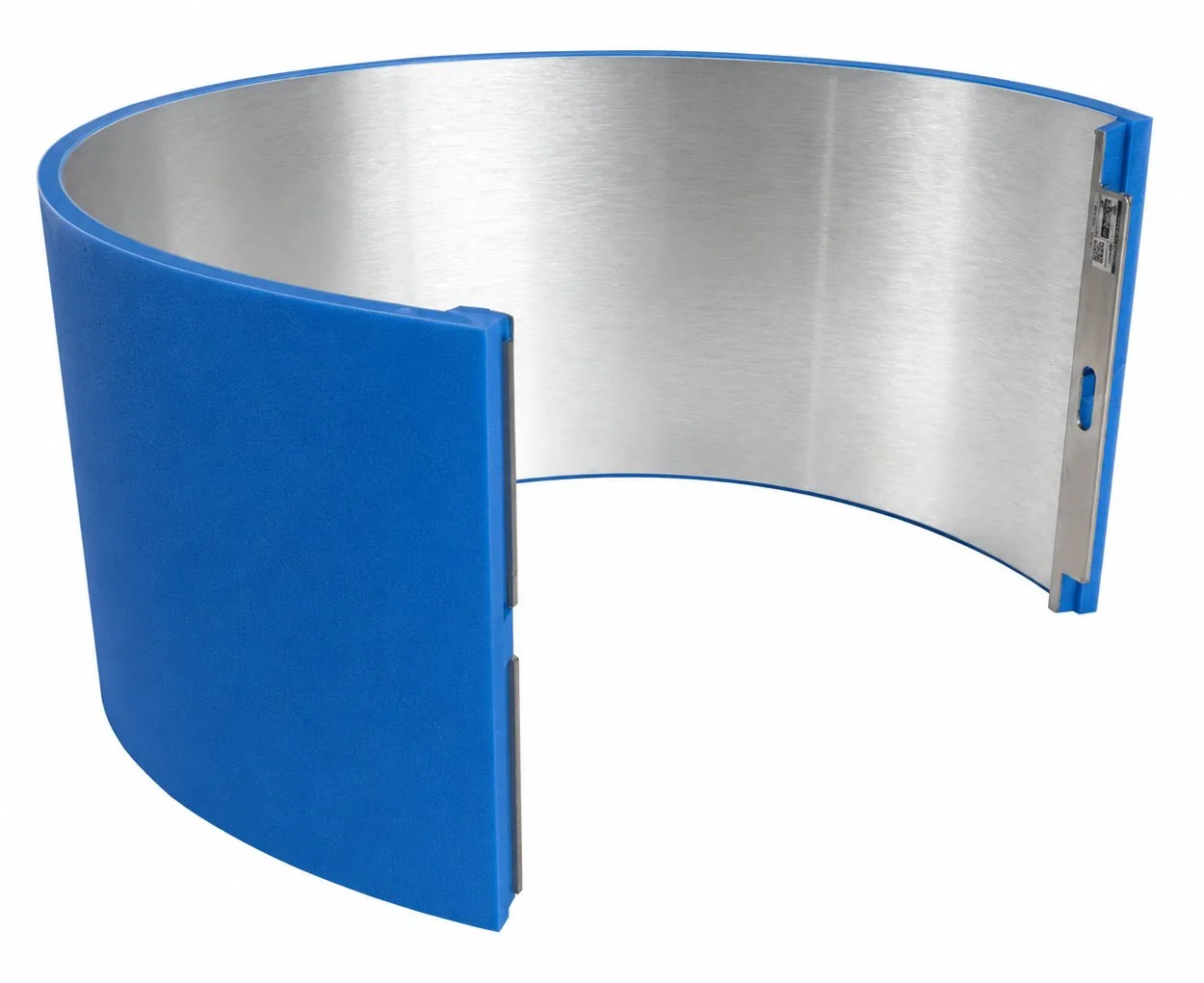
Buying a rotary die cut anvil cover is not the same as ordering a standard belt or bearing. The polyurethane working surface, steel backing or finger-lock connection, cylinder fit and slot geometry must work together on the actual corrugated die-cutting machine. A low unit price is not useful if the cover cannot seat correctly, produces uneven cutting pressure or requires rework during installation.
Fastest route to a usable quotation: send the machine model, full-cover photographs, cylinder diameter, cover width and thickness, slot width and depth, required quantity and delivery country. If any dimension is uncertain, say so and offer a drawing or physical sample for review.
1. Confirm Machine Fit Before Comparing Materials
Start with the die-cutting cylinder and mounting system. Two machines with similar working widths can use different cover widths, backing profiles or locking details. Rebuilt equipment may also differ from the original catalogue specification. Ask the supplier to confirm the replacement around your current part, drawing or machine information rather than selecting from appearance alone.
The most important fit data includes cylinder diameter at the installation position, usable cover width, total cover thickness, mounting-slot width and depth, joint profile and the number of cover segments around the cylinder.
2. Identify the Existing Locking Structure
Steel-backed covers use a metal-supported structure that must match the cylinder and slot. Finger-lock covers use an interlocking end profile designed for practical installation and routine replacement. Neither structure is universally better. The correct route is usually the one engineered for the machine unless a conversion has been reviewed in detail.
Provide close-up photographs of both ends, the inner backing and the cylinder slot. If the current cover has been damaged at the joint, photograph the slot after cleaning as well as the removed cover.
3. Select Hardness From the Application, Not a Guess
Polyurethane hardness affects deformation, cutting support and wear behavior, but it should not be selected in isolation. Board grade, die condition, pressure settings, production speed and the number of cover segments all influence performance. If the original hardness is unknown, describe the operating conditions and current problem instead of choosing a number from another machine.
Service life is also not a fixed material promise. Rotation practice, concentrated cutting tracks, damaged rules, excessive pressure, contamination and cylinder alignment can shorten the life of any cover.
4. Decide What Evidence the Supplier Should Review
A capable replacement supplier should be able to work from more than one evidence route:
- Machine model plus photographs: useful when the current cover is still installed and the model is reliable.
- Dimensioned drawing: best when all slot, width and thickness details are verified.
- Physical sample: valuable for uncommon backing or locking profiles, provided worn dimensions are checked.
- Previous production reference: the fastest route for repeat orders after the first specification has been confirmed.
Ask how the supplier records the confirmed specification for future replacements. Repeat-order control matters when several machines or cover series are used at one plant.
5. Supplier Questions That Reduce Purchase Risk
- Will you review the machine fit and locking structure before quoting?
- Can you manufacture from a drawing or physical sample when no OEM number is available?
- Which dimensions and tolerances will be confirmed before production?
- Can hardness and material route be matched to the operating condition?
- How are casting, machining and dimensional inspection controlled?
- Will the confirmed production reference be retained for repeat orders?
- What packaging and shipping information is included for export delivery?
A useful answer should identify missing technical information rather than immediately promise a universal size or service life.
6. Complete RFQ Checklist for Replacement Anvil Covers
- Company name, country and contact details
- Machine brand, model and working width
- Rotary die-cutting cylinder diameter
- Current cover width and total thickness
- Slot width and slot depth
- Steel-backed, finger-lock or other joint structure
- Current hardness, if known
- Quantity required and whether all segments form one set
- Clear photos of the outside, inner backing, both ends and installed cylinder
- Drawing, sample availability or known OEM reference
- Current problem: normal replacement, short life, joint damage, grooves or incomplete cutting
- Delivery city, country and preferred shipping method
For a detailed measurement sequence, use our polyurethane anvil cover measurement guide. To compare connection types, see steel-backed versus finger-lock anvil covers.
7. Copy-and-Send RFQ Template
Subject: RFQ—Replacement Rotary Die Cut Anvil Covers
Machine brand/model: ___
Cylinder diameter: ___ mm
Cover width × thickness: ___ × ___ mm
Slot width × depth: ___ × ___ mm
Locking structure: ___
Hardness: ___ / unknown
Quantity: ___ sets or pieces
Current problem: ___
Delivery destination: ___
Attachments: machine nameplate, installed-cylinder photo, both cover ends, inner backing, drawing or sample photo.
Sending this information by email or WhatsApp gives the technical team enough context to identify gaps before a price is confirmed.
8. Common Buying Mistakes
- Ordering only by outside color or a machine name found online
- Copying dimensions from a heavily worn cover without checking the machine
- Comparing quotations that use different locking structures or material routes
- Ignoring slot dimensions because the overall width appears correct
- Requesting a guaranteed service life without sharing pressure, die and rotation conditions
- Buying one replacement segment without confirming set consistency
Match the Cover to Your Machine Before You Buy
JUNSHIDA manufactures custom polyurethane anvil covers for corrugated rotary die-cutting equipment. Send the machine model, known dimensions, quantity and current-cover photos so our team can identify missing technical details before quoting.
No complete drawing? Clear photos and known measurements are enough to start.