
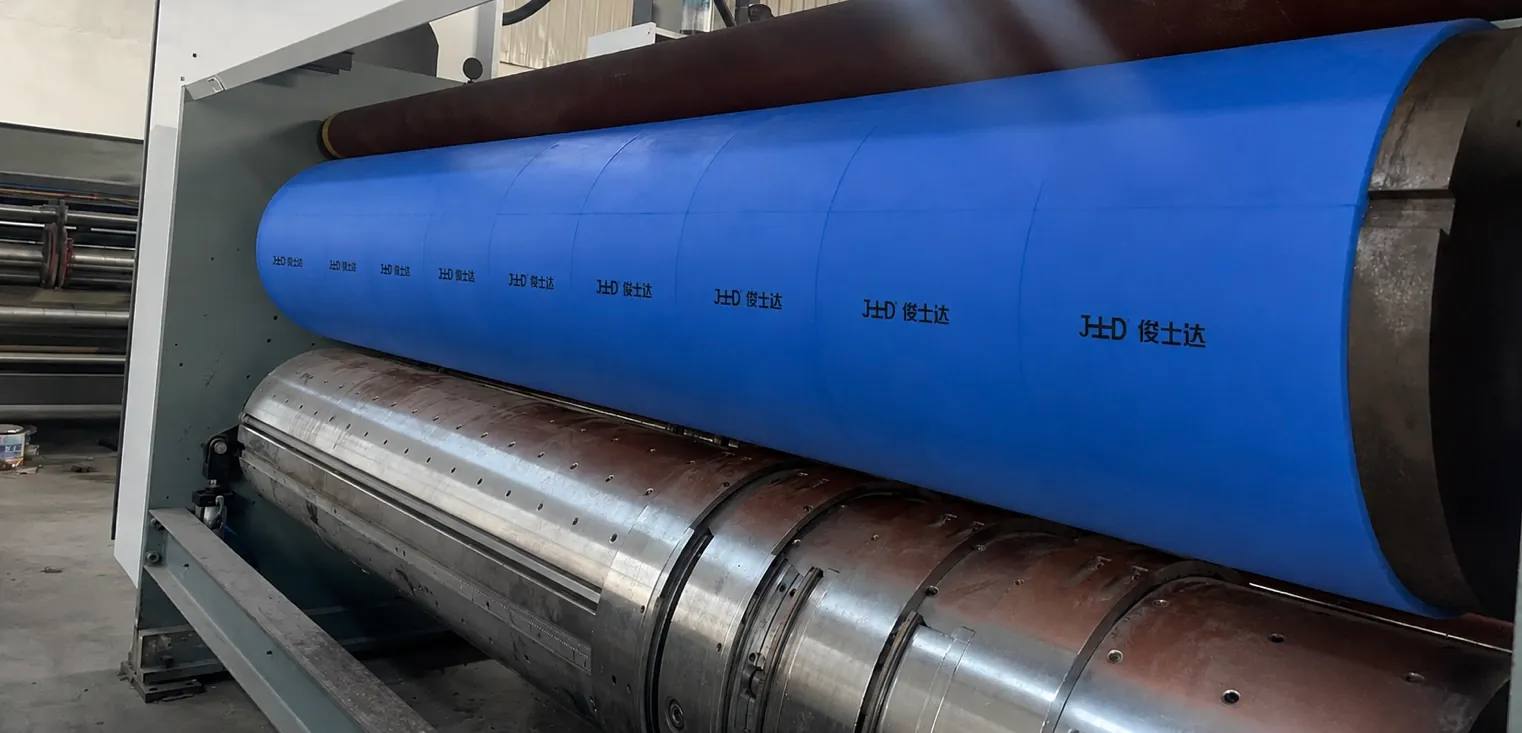
Rotary die cut anvil covers are consumable working parts, but replacement should be based on the wear pattern and machine condition—not calendar time alone. Board grade, cutting layout, die condition, pressure, cover rotation and cylinder alignment all affect service life.
Do not use one universal thickness or operating-hour limit. Follow the machine builder’s allowable dimensions and your plant’s verified reference. If the limit is unknown, compare the current set with the original drawing, an unworn sample or a supplier-confirmed specification.
1. A Deep Cutting Groove No Longer Levels Out After Rotation
Normal cover rotation or indexing distributes repeated cutting tracks. Replacement becomes likely when a deep circumferential groove remains after correct rotation, reaches a local low spot or causes incomplete cutting. First inspect the cutting rule and production layout; a damaged or projecting rule can quickly mark a new cover in the same position.
2. Low Spots or Uneven Diameter Affect Cutting Pressure
Measure several positions across the working width and around the cylinder. If one side or one segment is noticeably lower, the machine may require extra pressure to complete the cut. Check cylinder parallelism, bearing condition, installation and set consistency before assuming that material hardness is the cause.
3. The Joint or Locking Area Will Not Seat Securely
A raised joint, damaged steel backing, deformed finger lock or repeated movement at the connection is a replacement and safety concern. Stop and inspect the mounting slot for debris, wear or damage. Do not continue full-speed production with a cover that cannot remain correctly seated.
4. Cracks, Chipping or Surface Tearing Continue to Spread
Small surface marks should be monitored, but growing cracks, missing polyurethane, exposed backing or tearing at an edge can disturb cutting support and release debris. Record where the damage began and check for excessive pressure, sharp contamination, abnormal heat, chemical exposure or contact with nearby hardware.
5. Cut Quality Remains Unstable After Machine Checks
If incomplete cuts or variable depth remain after the die, rule height, pressure, alignment and installation have been checked, worn covers may no longer provide consistent support. Compare the defect location with the wear map. Do not increase total pressure repeatedly to compensate for one local problem.
6. Pressure Increases Have Become a Routine Adjustment
A gradual need for more pressure can indicate loss of working thickness or uneven support. Extra pressure may accelerate wear, damage rules and overload other machine components. Record recent setting changes and confirm the cover dimensions before the operating window becomes too narrow.
7. The Set Is Outside the Verified Dimensional Limit
Replace the set when measured thickness, working diameter or segment consistency is outside the limit specified for the machine. Mixed old and new segments can create height differences, joint impact and uneven cutting pressure. The acceptable difference must come from the machine or confirmed production specification—not a generic online value.
Checks to Complete Before Ordering New Covers
- Clean the cylinder, mounting slots and cover surface.
- Photograph the complete cylinder and mark operator side, drive side and rotation direction.
- Inspect the die, rule height and repeated cutting tracks.
- Verify pressure, cylinder parallelism, bearing condition and runout according to the machine procedure.
- Confirm that each joint is fully seated and each segment belongs to the same set.
- Measure cover width, thickness, cylinder diameter, slot width and slot depth.
Replace One Segment or the Complete Set?
A single segment may be replaced only when the machine arrangement permits it and the new segment can match the remaining set in thickness, hardness, structure and working height. If several segments are worn, the dimensions vary across the cylinder or the locking system has aged together, replacing the complete set is usually the more controlled route.
Information to Send With a Replacement Request
- Machine brand, model and working width
- Cylinder diameter and number of cover segments
- Cover width and total thickness
- Slot width, slot depth and locking structure
- Hardness or previous order reference, if known
- Full-cylinder, joint, inner-backing and wear-pattern photos
- Current symptom, pressure changes and approximate service history
- Quantity and delivery country
Use the anvil cover measurement guide to record dimensions. For grooves and side-to-side wear, follow the uneven wear troubleshooting guide. Buyers preparing an RFQ can also use the rotary die cut anvil cover buying guide.
Request a Machine-Specific Review
JUNSHIDA manufactures custom polyurethane anvil covers for corrugated rotary die-cutting machinery. Send the machine model, dimensions and clear photos of the current set so the connection structure and missing data can be reviewed before quotation.
Request an Anvil Cover Replacement Review
Frequently Asked Questions
Can I rotate an anvil cover instead of replacing it?
Rotation can distribute repeated cutting tracks when the cover and locking areas remain serviceable. Replace the cover if deep grooves, low spots, cracks, joint damage or dimensions outside the verified limit remain after correct rotation and machine checks.
Can one damaged anvil cover segment be replaced?
Only when the machine permits it and the replacement matches the remaining set in thickness, hardness, structure and working height. Otherwise a complete matched set is safer and more consistent.
Why do new anvil covers still produce incomplete cuts?
New covers cannot correct a damaged die, incorrect rule height, poor installation, cylinder misalignment or unsuitable pressure. Check the complete cutting system before changing material or hardness.